
Business cases and problem definition
Read a business case to identify the decision, stakeholders and constraints. Separate the core problem from symptoms and record assumptions that need checking.

College Students
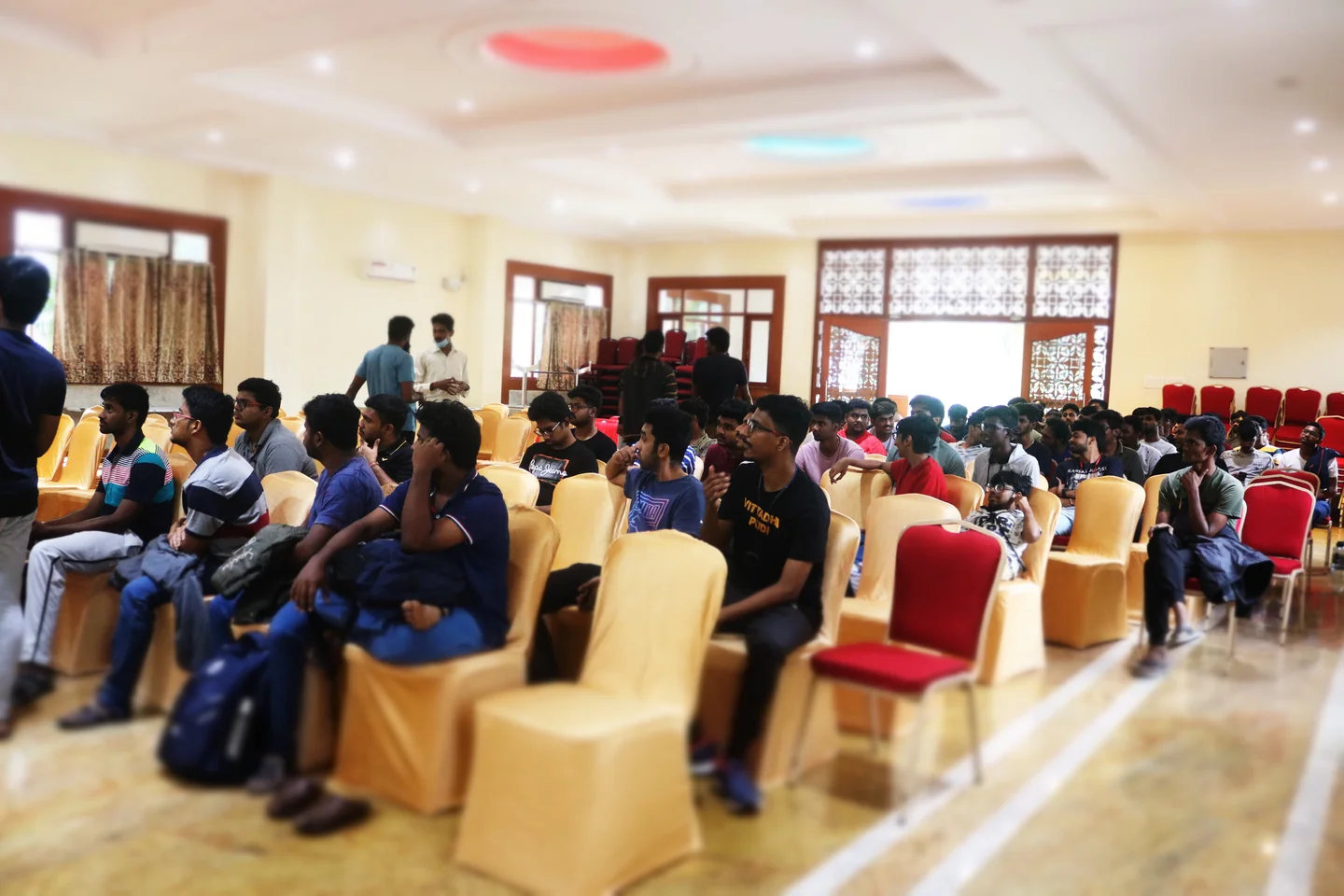
Help management students translate classroom ideas into practical business communication, analysis and team decisions. Learners work through cases, stakeholder conversations and an evidence-based recommendation.
LEARNING FOCUS
Business Readiness & Management Skills connects core concepts with guided application. The outline below is a discussion framework; the final syllabus is agreed for your learners.
Read a business case to identify the decision, stakeholders and constraints. Separate the core problem from symptoms and record assumptions that need checking.
Present a recommendation with an understandable argument and relevant evidence. Write an executive summary that highlights the issue, choice and practical implication.
Prepare for a stakeholder conversation by identifying interests and possible trade-offs. Practise questions, listening and a reasoned proposal rather than a scripted sales pitch.
Agree team roles and use evidence to resolve differences. Practise addressing a missed commitment or conflicting viewpoint without turning the discussion into a personal disagreement.
Relate a recommendation to customers, costs, operations and implementation. Explain a project contribution in a management interview and acknowledge what the available evidence cannot establish.
PRACTICE & FEEDBACK
A team case recommendation, stakeholder role play and individual professional development plan.
GETTING STARTED
Suitable for management students with introductory business knowledge. Cases and role plays can be adapted to their specialisation and study stage.
Review the case recommendation, presentation, stakeholder role play and individual reflection for reasoning, feasibility and communication quality.
The institution and trainer agree the final rubric, attendance requirement and feedback format before delivery.
FOR YOUR INSTITUTION
MBA and other management students preparing for internships and business roles.
Workshop, modular course or institutional pathway. Hours and batch structure are agreed after the needs discussion.
Confirm prerequisites, trainer availability, venue, equipment and any specialist supervision needed for practical work.
Agree attendance, practical tasks, feedback and certificate terms in writing before delivery.
PROGRAM BACKGROUND
MUST – MBA’s Unique Skills Training Program is designed for Business Administration students. MUST program is not a typical soft skill / employability skills program. MUST is a unique mentoring initiative to empower Business Administration students to realize their career goals.
MUST program content have been designed to benefit both Business Administration students and their Institution. The focus of MUST program is to impart skills and insights not covered by a typical soft skills / employability skills program. The Business Administration students will get enough guidance and clues from mentors with considerable industry experience to become successful in their first job and develop themselves. Students will learn: Aligning Goals – You keep on enhancing Personal and Business goals, yet find there is misalignment. You can balance your life. Powerful Persuasion – You try your best to communicate with positive intentions. Others still seem to take wrong meaning. You can change their stand. Consistency and Focus – You know what you want, still you lack focus. You can learn to be consistent. Lifting Team spirit – Your people are good individually, yet collectively they create conflicts. You can be an Inspiring Anchor. Keeping High Esteem – You manage to keep your head high in front of others, inside may be feel low. You can improve Self-Image. Course Outline Capsule 1: Personal profile - Understand the dimensions of behaviour model – Describe preferred behaviour using the Personal Profile System – Apply strategies to create an action plan for managing performance – Learn Strategies for managing other people’s behavioural preferences – Learn strategies for shifting from one role to another role – Use the personal profile for managing career development – Apply management approaches based on willingness, ability and behavioural preferences. Capsule 2: Leadership Development - Understand the dimensions of behaviour model – Describe preferred behaviour using the Personal Profile System – Apply strategies to create an action plan for managing performance – Learn Strategies for managing other people’s behavioural preferences – Learn strategies for shifting from one role to another role – Use the personal profile for managing career development – Apply management approaches based on willingness, ability and behavioural preferences. Capsule 3: Team Building - Assess our personality characteristics in relation to others, Identify team decision making techniques, Understand our roles in a team decision making process, Identify team values and the ground rules to practice them. Capsule 4: Body, Mind and Soul Integration - Physical well-being – Learning useful physical fitness exercises – Health Tips – Yoga – For concentration and control – Spirituality or values for soul (Meditation) Capsule 5: Emotional Intelligence - Understanding Emotion – Temper and Mood – Self-awareness – sensitivity – Emotion regulation or management – Empathy – Social intelligence. Capsule 6: Interview preparation - Business Trend awareness – Resume writing – How to attend Group Discussion – Fearless Interview – Entrepreneurial Thinking. Capsule 7: Verbal Aptitude - Grammar Concepts – Antonyms – Spellings – Spotting Errors – Ordering of Words – Sentence Improvement – Ordering of Sentences – Closet Test – One Word Substitutes – Change of Voice – Verbal Analogies – Selecting Words – Sentence Formation – Sentence Correction – Completing Statements – Paragraph Formation – Fill in the blanks – Error Correction – Synonyms – Comprehension – Idioms and Phrases – Change of Speech – Para Jumbles. Capsule 8: Business Skills - Negotiation Skills, Business Meetings, Business Socializing, Business Telephoning, Business Presentation. Course Duration 30 Hours i.e., 5 day Workshop Some salient features of the program Uniqueness in Methodology. It is an intensive but a flexible program designed to suit participants with varied learning patterns. Uses sharing and reflecting on experiences of the participants as the major learning tool. Program have clear metrics for measuring the effectiveness. Is not designed to generate agreement but reactions It helps the student’s to take part effectively in various selection procedures adopted by the recruiters. Methodology Real-World Experience Simulation between Facilitator & Participants. Participants will be led in a Directed Learning Mode, not Just with Facilitator’s one-sided Lectures. Combination of Presentations and Examples from Facilitator and Interactive / Hands-On Participants’ Exercises with Individual / Group Report-Outs. Experiential workshop environment where participants will be educated to take risks and make adjustments based on their results from Role-Plays before approaching large real-time projects. Download PDF
Brochures are retained from the original website. Confirm the current scope and terms when enquiring.
YOUR QUESTIONS
MBA and other management students preparing for internships and business roles.
Business cases and problem definition, Presentations and concise executive summaries, Stakeholder communication and negotiation, Team leadership and constructive conflict, Commercial awareness and management interviews.
A team case recommendation, stakeholder role play and individual professional development plan.
Suitable for management students with introductory business knowledge. Cases and role plays can be adapted to their specialisation and study stage.
Discuss a workshop, a modular course or a longer institutional pathway. The delivery mode, hours and trainer availability are confirmed in your proposal.
Review the case recommendation, presentation, stakeholder role play and individual reflection for reasoning, feasibility and communication quality.
Yes. Share the batch profile, current skill level, language preferences and learning objectives so the proposed activities and examples can be adapted.
Requirements depend on the final learning plan. Confirm room layout, display and audio equipment, devices, software, workshop space or outdoor arrangements before booking.
Certificate availability, the issuing organisation, attendance requirement and assessment criteria must be confirmed in the proposal. No external accreditation or professional licence is implied.
Email info@siegergroups.com with your institution name, business readiness & management skills requirement, learner profile, batch size, preferred dates and location.
CONTINUE EXPLORING
College Students
Build a practical bridge between academic learning and the recruitment process. Students practise presenting their experience, working through selection tasks and responding to interview questions with clarity.
Explore the program
College Students
Help students approach recruitment assessments with stronger fundamentals, deliberate practice and a clear strategy for managing time.
Explore the program
College Students
Turn ideas into clear conversations and presentations. Students practise expressing a point, listening carefully and adapting their communication to academic and workplace situations.
Explore the programLET’S BUILD YOUR LEARNING PLAN
Tell us the audience, learning priorities, batch size and preferred dates. Let’s shape the next step together.
ENQUIRE WITH SIEGER ACADEMY
Share your institution, learner profile, training priorities and preferred dates. We’ll discuss a programme that fits your students and academic calendar.
Enquiries are handled through our Academy form. Privacy information